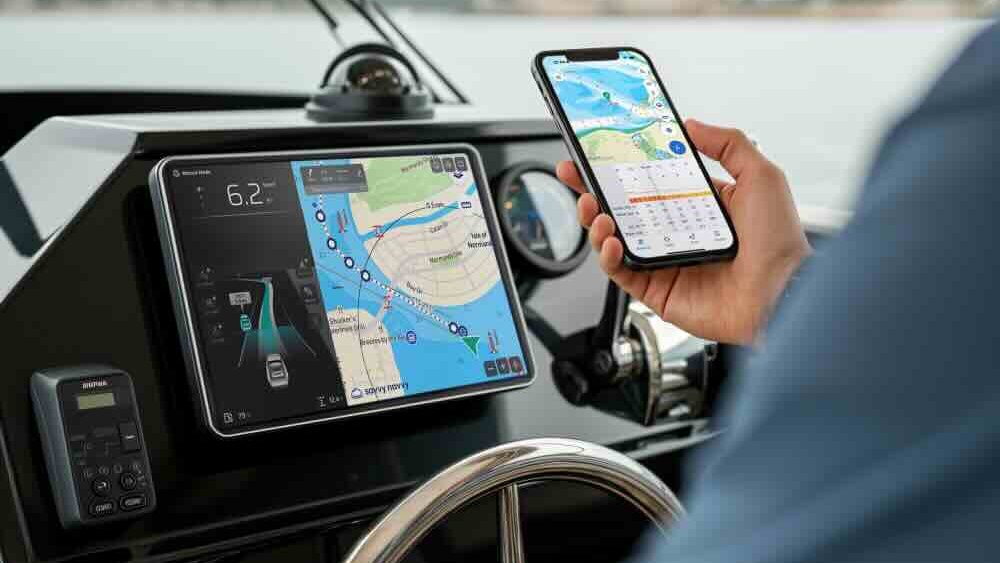
Mapping the world’s oceans is complex enough, but making sense of fragmented, conflicting hydrographic data for over 2,200 US lakes requires a specific kind of technical rigor. When Elena Petru transitioned from land-based geomatics – including roles at Jacobs and Landmark – to marine navigation specialist Savvy Navvy in 2023, she stepped directly into this challenge.
As a geospatial data engineer, Petru now builds the critical pipelines that translate spatial datasets into reliable user features.
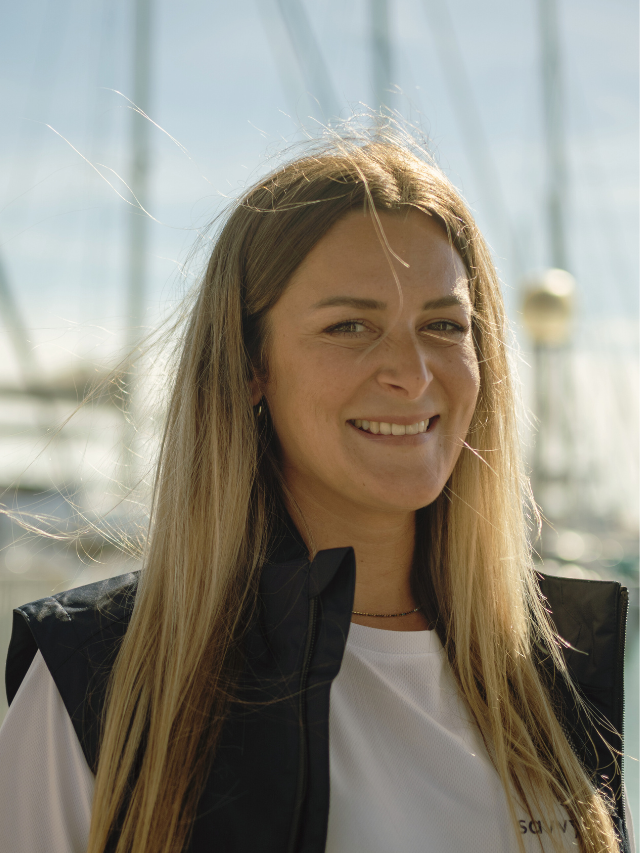
In this interview, Petru shares her perspective on career pathways, female representation across the maritime technology sector, and how the leisure marine sector can demystify its backend engineering to attract specialist talent from wider tech disciplines.
Diversity and representation in marine engineering
“Earlier in my career, I was lucky to see women who were already highly respected in technical and leadership roles, as well as others building that credibility over time,” recalls Petru. “What stayed with me was that they did not all lead or progress in the same way, but they were taken seriously because they were really good at what they did.
“I think that is where representation is powerful. It is not only about seeing someone exactly like you. Sometimes it is about seeing enough different examples that you stop thinking there is only one type of person who belongs in the room.”
Having been in the engineering for several years, Petru says there has been a positive shift in how female technical experts are received in the workplace.
“I have been fortunate in the technical environments I’ve worked in, and I’ve generally felt respected for my work, but I also think there is now more openness to recognising technical authority in different forms.
“There are more women in engineering networks, more open conversations around representation, and more visible role models. That matters because it makes these career paths feel more achievable, especially for people who may not have seen themselves represented in technical roles before.”
She acknowledges though that there are still challenges, and experiences vary a lot by company, sector and country.
“For me, the bigger question is not only how women are received once they are in these roles, but whether enough young women can see these roles as realistic options in the first place. Sometimes the first barrier is not ability. It is whether you can imagine yourself there at all.
Attracting expertise
Building on this need for earlier engagement, Petru notes that technical recruitment is as much about shifting perceptions of the work itself as it is about highlighting opportunities. With the marine sector incorporating more and more digital technology, which in turn requires top-tier data engineers, software developers, and product specialists, the industry needs to ensure there is visibility and clear pathways that show young female engineers that the marine sector offers complex, cutting-edge technical challenges and career opportunities.
She continues: “I think the marine sector needs to make the technical work behind the industry much more visible.
“From the outside, it is easy to see the boat, the chart or the app. What is not always visible is the amount of data, engineering and decision making sitting behind it: hydrographic data, routing, weather, tides, geospatial processing, product design and all the judgement needed to turn complex information into something useful.”
As a geospatial data engineer at Savvy Navvy, Petru now builds the critical pipelines that translate spatial datasets into reliable user features.
Crucially, demystifying this technical backend also highlights how accessible the sector can be for talent migrating from traditional engineering paths.
“There is more overlap than people might realise between marine and other technical disciplines. A lot of the underlying skills are transferable: building reliable systems, solving practical problems and communicating complex information clearly.
“The point is you do not need to know everything from day one. Domain knowledge can be learned, especially if you are curious and willing to ask questions. What matters is bringing a strong technical foundation and an interest in solving real-world problems.”
The challenges of mapping marine data
Self-titled as the Google Maps for boats, Savvy Navvy provides smart navigation with features such as optimal route mapping and dynamic ETAs based on real-time data.
Read MIN’s interview with CEO Jelte Liebrand.
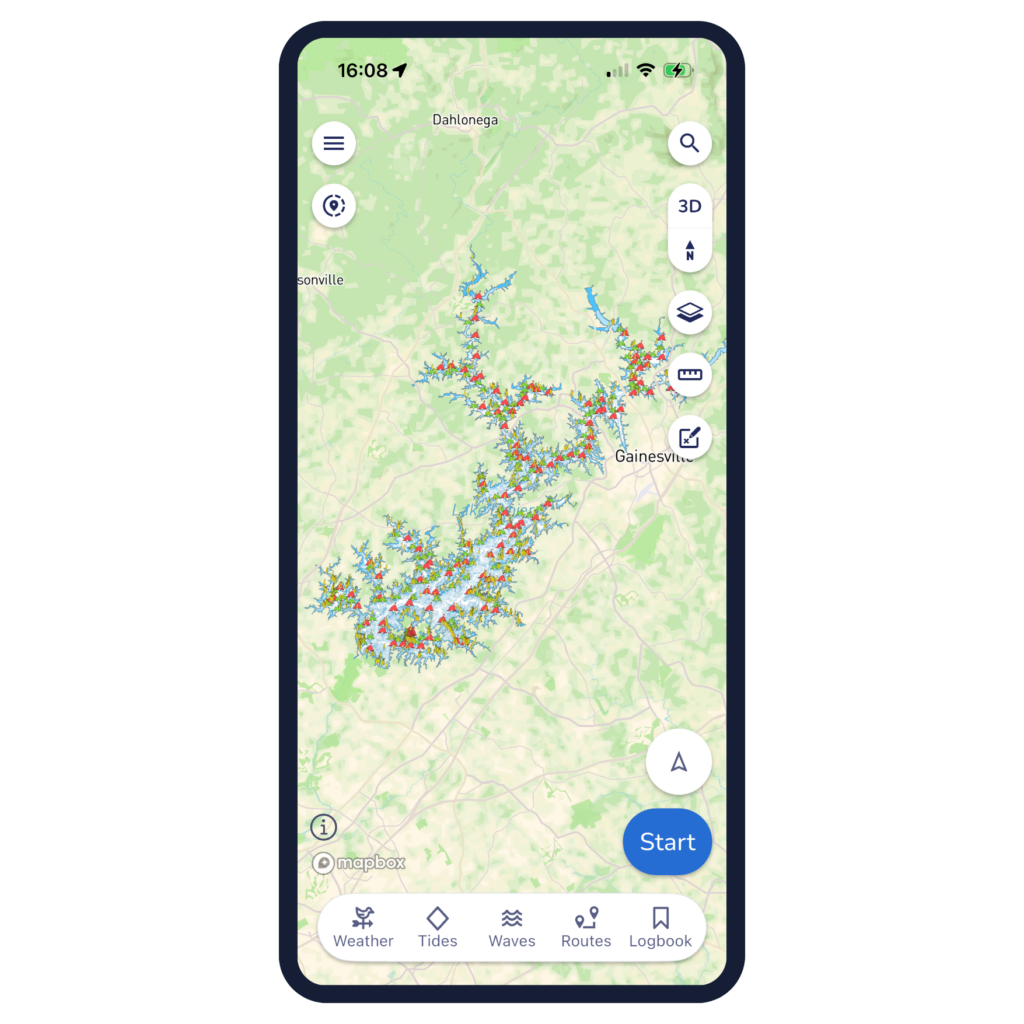
While land mapping is highly structured, marine and hydrographic data rarely has “canonical” sources. Petru says the biggest adjustment she had to make after entering the marine sector, was working “with a much wider range of uncertainty in the data. I came from a geomatics and surveying background, where a lot of the land mapping data I worked with was well documented and built to fit into a wider system. You still encounter errors and edge cases in any spatial dataset, but there is usually a strong governance structure behind the data: clear lineage, consistent attribution and a good understanding of its intended use.”
Marine and inland water data stretched that mindset in a different way, particularly when working across multiple countries and regions.
“Coverage varies a lot,” she explains, “and available sources are not always produced to the same standard, scale, purpose or update cycle. There is also a different relationship with change: on land, many mapped features are relatively stable. In marine and inland environments, the picture can be affected by water levels, survey age, sedimentation, changing shorelines and environmental conditions.
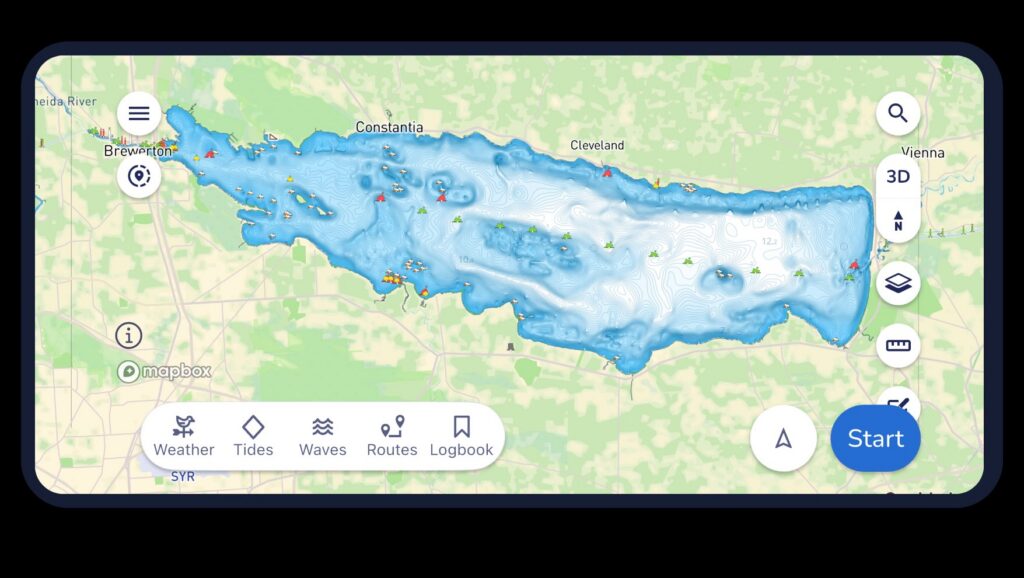
“With lakes in particular, two credible datasets can represent the same waterbody differently, not because one is necessarily wrong, but because they may have been captured at different times, for different use cases, or at different levels of detail.
“So, the transition was not just technical. It was a shift in how I approached uncertainty. That is where my previous experience has been valuable. It gives you a habit of questioning the data provenance, how it was captured, whether it is fit for the intended use, and what level of confidence should be placed in it. In marine data, that mindset is essential because the technical challenge is not just processing the data, but understanding the context behind it.”
As data sets frequently contradict or overlap, Savvy Navvy has required a tight in-house validation process.
“The temptation with any data pipeline is to let the automation do the thinking. What we have learned is that the intelligence has to come first, and the automation follows from it.
“Before any data reaches the pipeline, we invest significant time in understanding each source – its origin, how it was produced, its age, its intended purpose, and whether it is appropriate for the area and use case we are working on. Hydrographic and inland water data is fragmented by nature. Sources were not designed to work together, and treating them as equivalent would introduce exactly the kind of errors we are trying to avoid.
“The expertise we apply at that stage – assessing lineage, fitness for purpose, consistency, and limitations – is what gives the pipeline its integrity. Once that judgement is embedded, we can apply it consistently and at scale across regions that would be impossible to handle manually.
“What the pipeline then delivers is repeatable, consistent output from inherently inconsistent inputs. That is a harder problem than it sounds, and the quality of the result depends entirely on the quality of the decisions made before processing begins. Where sources conflict, the goal is not to find a middle ground – it is to apply the most appropriate source for the intended purpose, based on a clear rationale.
“For boaters, that means chart coverage they can trust, even in areas where the underlying data landscape is genuinely complex.”
The post Transferable skills and tech authority: Elena Petru on modern marine engineering appeared first on Marine Industry News.
Leave a Reply